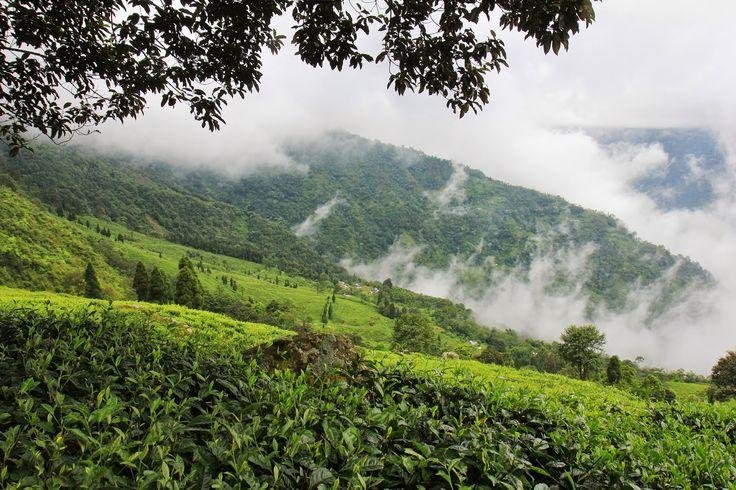
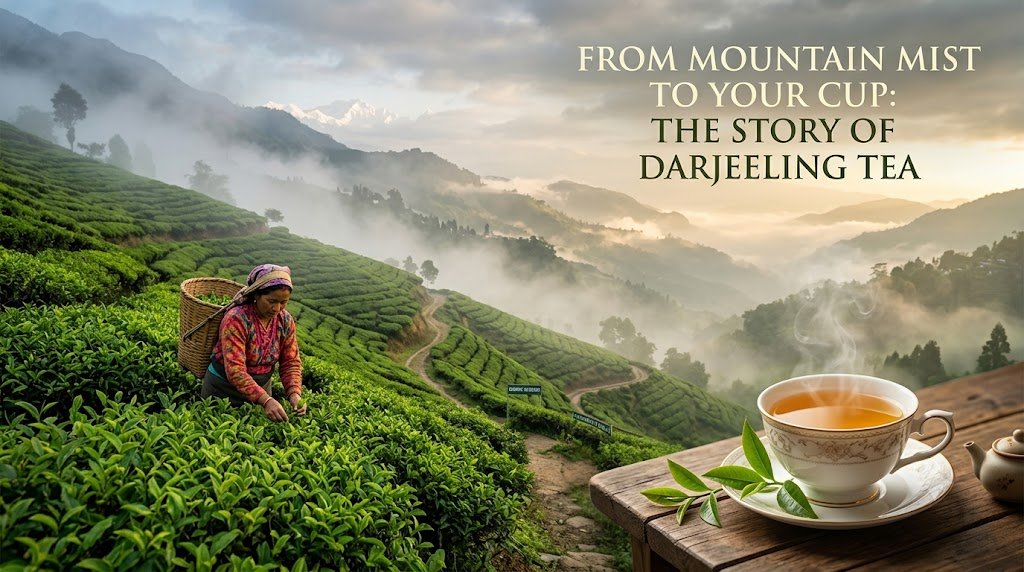
Where the story begins
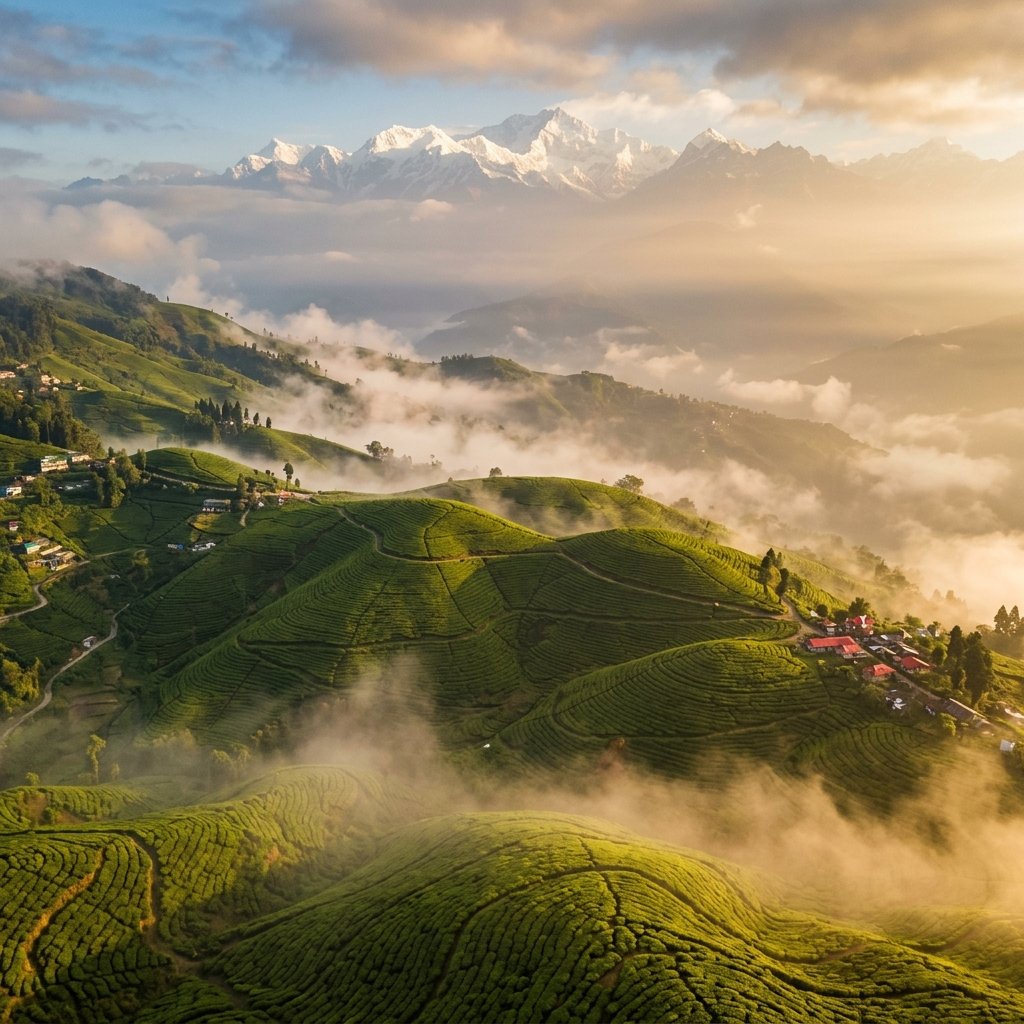
High in the hills of West Bengal, where clouds drift across steep green slopes and the Himalayan air moves through rows of tea bushes, a remarkable tea takes shape.
The region’s distinctive combination of geography, climate and tea-growing traditions gives its teas a character that is difficult to replicate elsewhere. The Tea Board of India describes Darjeeling as a region surrounded by the Himalayas, with tea gardens spread across its mountain landscape.
For tea lovers, the fascination isn’t simply in the finished cup.
It’s in understanding where that cup begins.
From leaf to harvest
The journey begins with the tea plant.
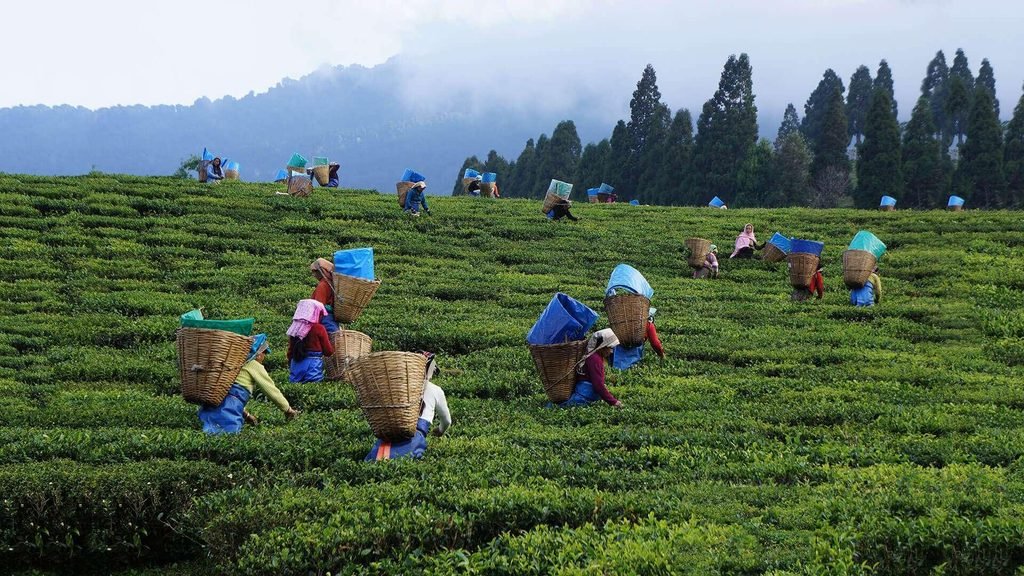
Tender leaves are carefully plucked from the bushes, traditionally focusing on young shoots and leaves. In Darjeeling, hand-plucking remains an important part of tea cultivation, and the Tea Board of India highlights the role of tea pluckers working through the gardens during the harvest.
Once harvested, the leaves begin their transformation.
Depending on the style of tea being produced, the leaves go through stages such as withering, rolling, oxidation and drying.
Each stage influences the final appearance, aroma and taste.
What began as a fresh green leaf eventually becomes the tea that finds its way into your teapot.
A tea shaped by the mountains
Darjeeling’s tea gardens occupy mountainous terrain where elevation, cool temperatures, rainfall and mist create a distinctive growing environment.
Unlike tea grown across broad, low-lying plains, Darjeeling’s gardens follow the contours of the hills. The changing conditions across different slopes and gardens contribute to the individuality of their teas.
That is why two Darjeeling teas can taste remarkably different.
One may be light and floral.
Another may have fruity or muscatel-like notes.
Another may offer a deeper, more rounded character.
The landscape becomes part of the flavour.