
Why Brewing Matters
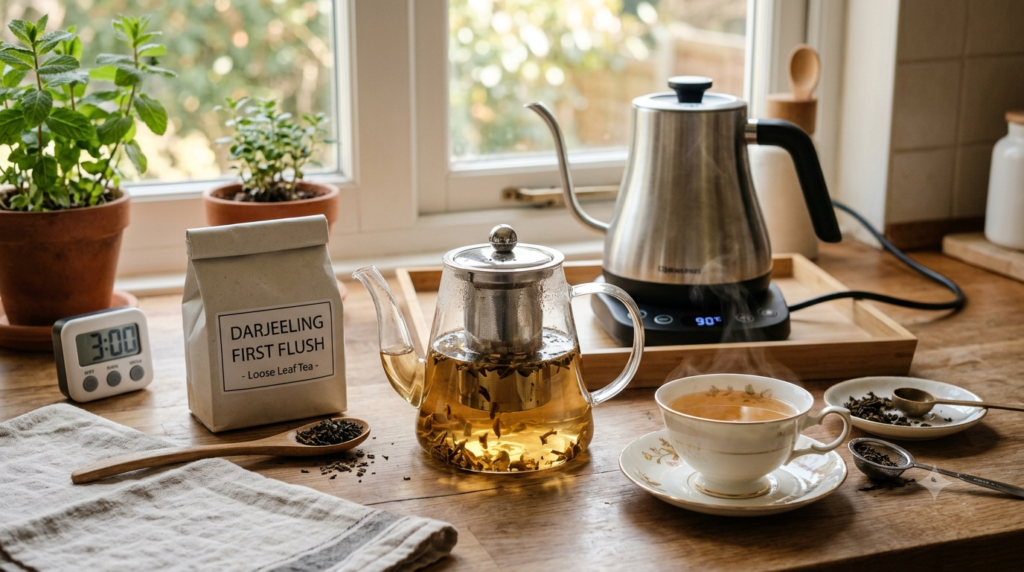
Darjeeling tea is often called the “Champagne of Teas” for its distinctive aroma, delicate character, and layered flavour.
But even the finest leaves can lose their character if they are brewed incorrectly.
Too much tea, water that is too hot, or a few extra minutes of steeping can turn a bright, floral cup into something harsh and bitter.
The good news? Brewing Darjeeling tea at home is surprisingly simple.
With a few small adjustments, you can bring out the character of the tea exactly as it was meant to be enjoyed.
Start With Good Water
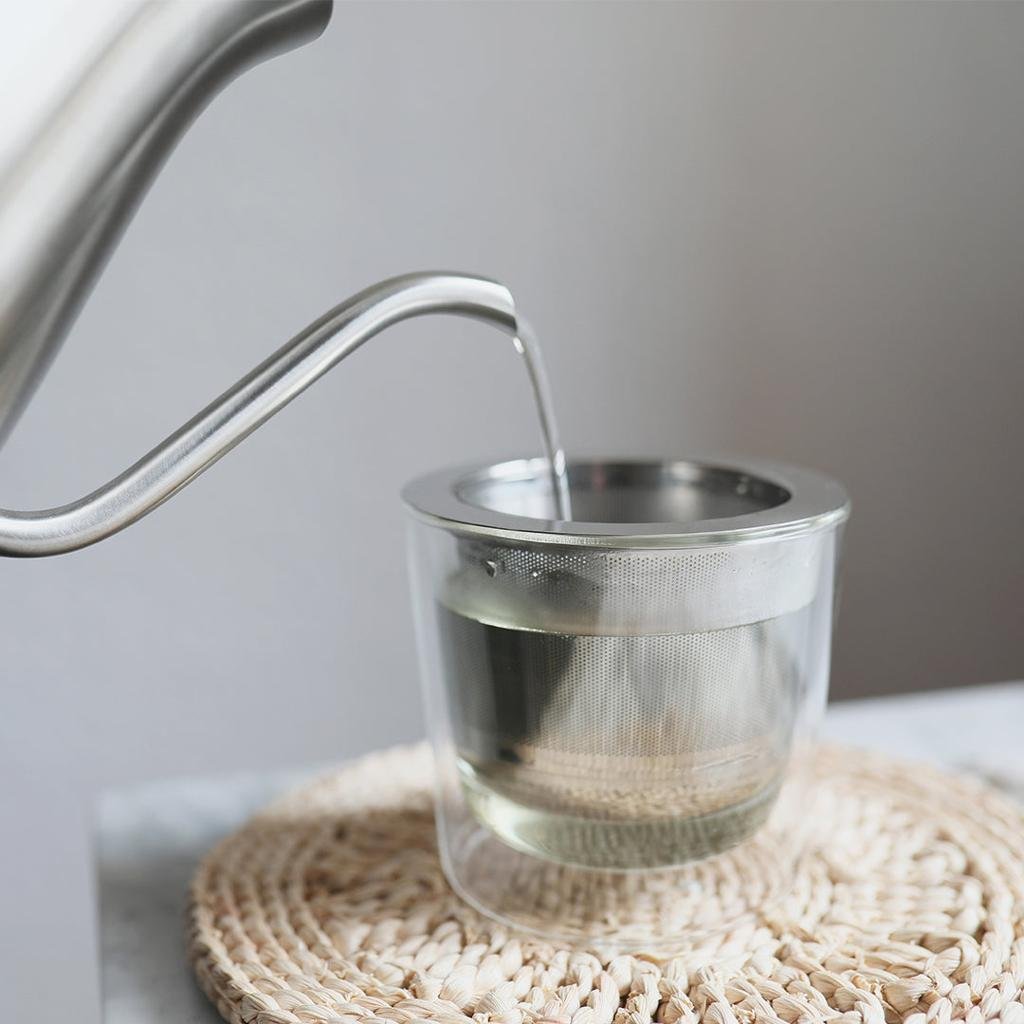
Water makes up most of your cup, so its quality matters.
Whenever possible, use fresh, clean, filtered water. Avoid water that has been boiled repeatedly, as it can produce a flat-tasting cup.
For Darjeeling tea, aim for water around 85–95°C, rather than pouring aggressively boiling water directly over the leaves.
If you don’t have a thermometer, simply bring the water to a boil and let it rest for around 1–2 minutes before brewing.
Measure Your Tea
For a single cup, start with approximately:
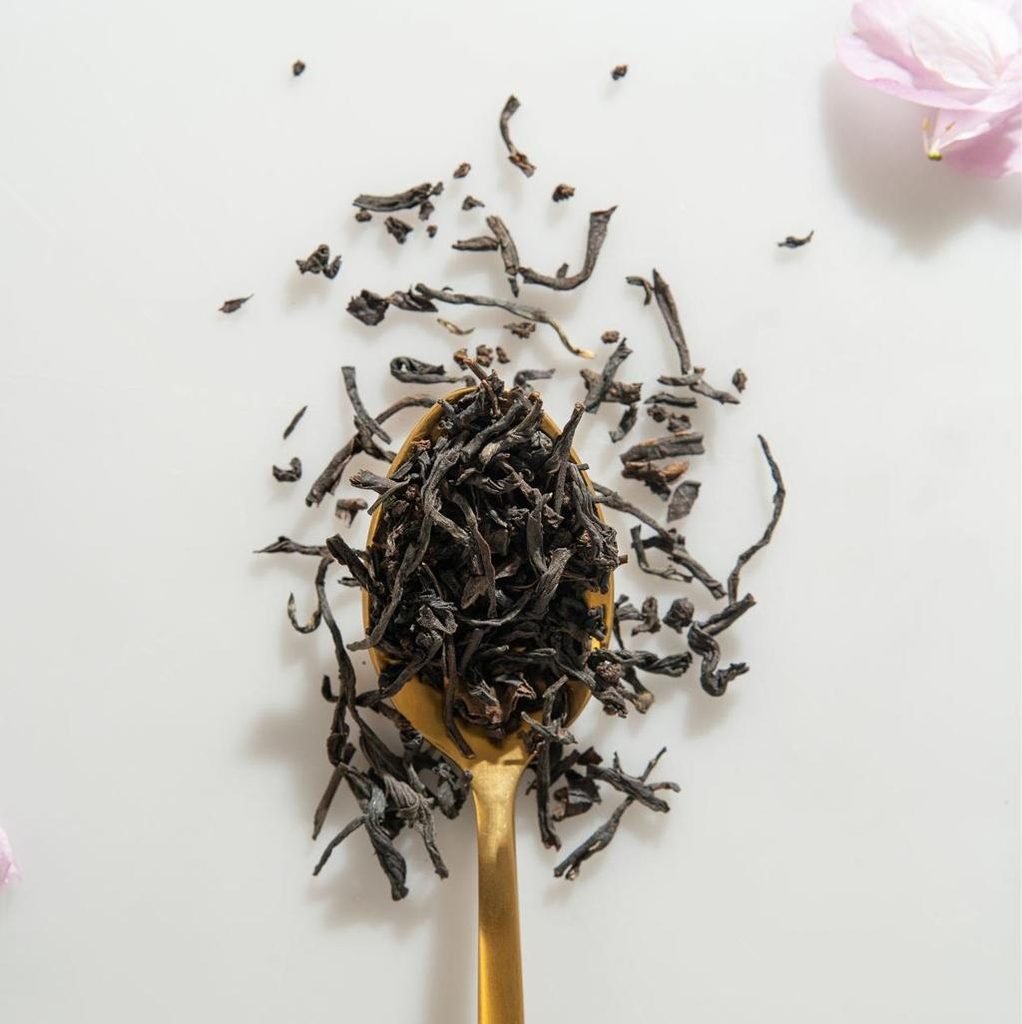
1 teaspoon (around 2–2.5 g) of loose-leaf Darjeeling tea for 200–250 ml of water.
This is a starting point rather than a strict rule.
Prefer a stronger cup? Add a little more tea.
Want something lighter and more delicate? Use slightly less.
One of the advantages of loose-leaf tea is being able to adjust the brew according to your own palate.
The Perfect Steeping Time
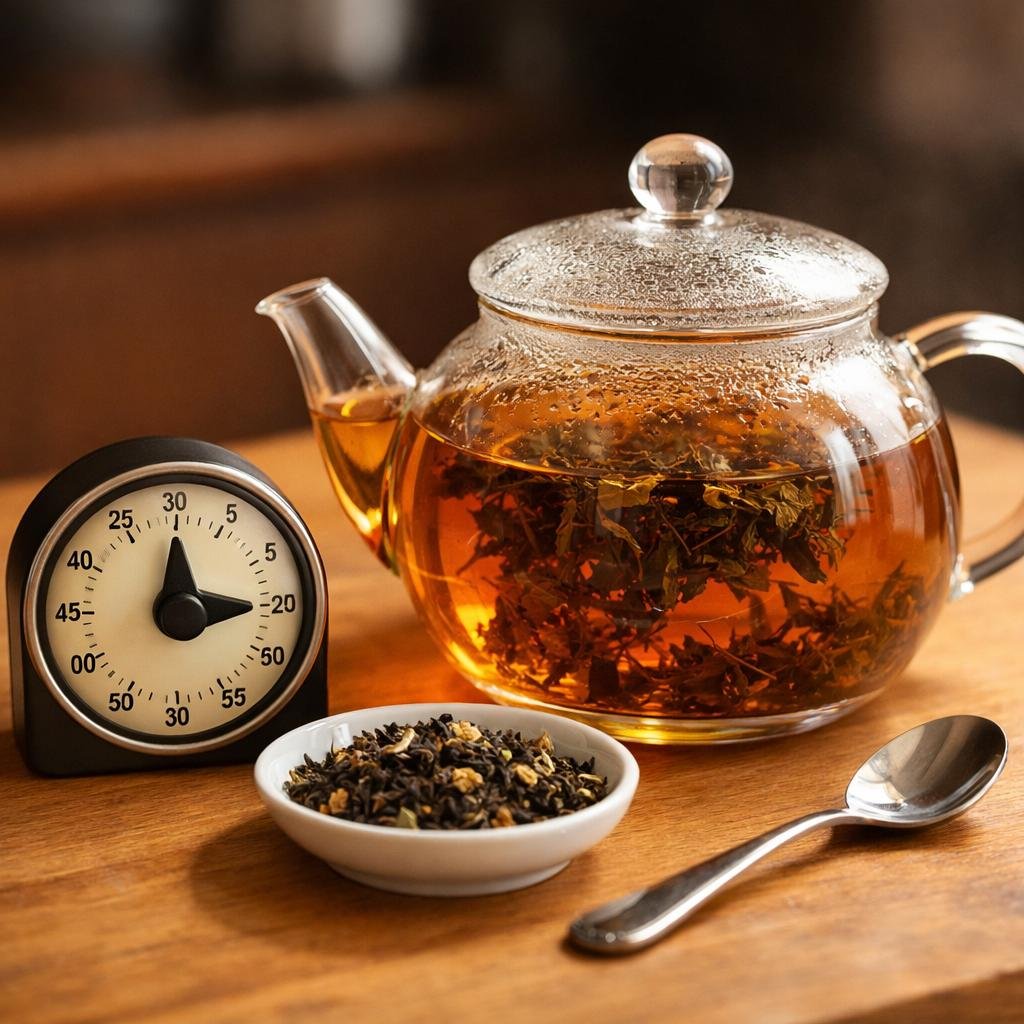
Place the leaves in your teapot, infuser, or cup and pour the hot water over them.
For most Darjeeling teas, begin with a steeping time of around 3–4 minutes.
Watch the colour develop, but don’t rely on colour alone. Darjeeling tea can remain relatively light while already delivering plenty of flavour.
After steeping, remove or strain the leaves.
Don’t leave the leaves sitting in the water.
Over-steeping can draw out excessive tannins, resulting in a noticeably astringent or bitter cup.
Taste It Before Adding Anything
Darjeeling is particularly enjoyable without milk or sugar.
Take a moment to taste the tea on its own.
Depending on the season, garden, and style, you may notice characteristics such as:
- Floral aromas
- Muscatel-like sweetness
- Fruity notes
- Light citrus
- Woody or earthy undertones
- A clean, brisk finish
These subtle flavours are part of what makes Darjeeling tea so distinctive.
If you’re new to it, try drinking the first few cups without additions. Once you’ve experienced the natural character of the leaves, you can decide whether you prefer a touch of sweetness.
A Simple Darjeeling Brewing GuideA Simple Darjeeling Brewing Guide
| tep | What to Do |
|---|---|
| 1. Water | Use fresh, filtered water |
| 2. Temperature | Around 85–95°C |
| 3. Tea | 1 tsp / 2–2.5 g per 200–250 ml |
| 4. Steep | Approximately 3–4 minutes |
| 5. Strain | Remove the leaves after brewing |
| 6. Taste | Enjoy plain before adding anythingtep What to Do 1. Water Use fresh, filtered water 2. Temperature Around 85–95°C 3. Tea 1 tsp / 2–2.5 g per 200–250 ml 4. Steep Approximately 3–4 minutes 5. Strain Remove the leaves after brewing 6. Taste Enjoy plain before adding anythingv |
Experiment With Your Cup
There isn’t one single “perfect” way to brew Darjeeling.
Your ideal cup depends on the particular tea and your personal preference.
Try brewing the same leaves at different temperatures or for slightly different times. You may discover that an extra 30 seconds brings out more body, while a shorter infusion highlights the floral character.
You can also experiment with multiple shorter infusions when using suitable whole-leaf teas. Each infusion can reveal a slightly different layer of the leaves.
The key is to change one variable at a time so you can understand what actually changes the flavour.
Common Brewing Mistakes to Avoid

Using boiling water: Extremely hot water can overwhelm delicate Darjeeling leaves.
Over-steeping: Longer isn’t always stronger in a good way. Excessive steeping can increase bitterness and astringency.
Using too many leaves: More tea doesn’t necessarily mean better flavour.
Adding milk immediately: Milk can mask the delicate floral and fruity notes that make Darjeeling special.
Re-boiling water: Fresh water generally produces a cleaner, brighter cup.
The Auryn Way
At Auryn, we believe tea is more than a beverage — it is an experience shaped by origin, leaf, season, craft, and preparation.
Brewing Darjeeling tea doesn’t require complicated equipment or elaborate rituals.
Start with quality leaves. Use fresh water. Give the tea the right temperature and enough time to open.
Then slow down and taste.
Because sometimes, the perfect cup isn’t about doing more.
It’s about letting the tea speak for itself.
Brew. Taste. Discover.
Your next cup of Darjeeling may only be a few minutes away.
Auryn Tea — From Origin to Your Cup.