
Two Regions, One Tea Story
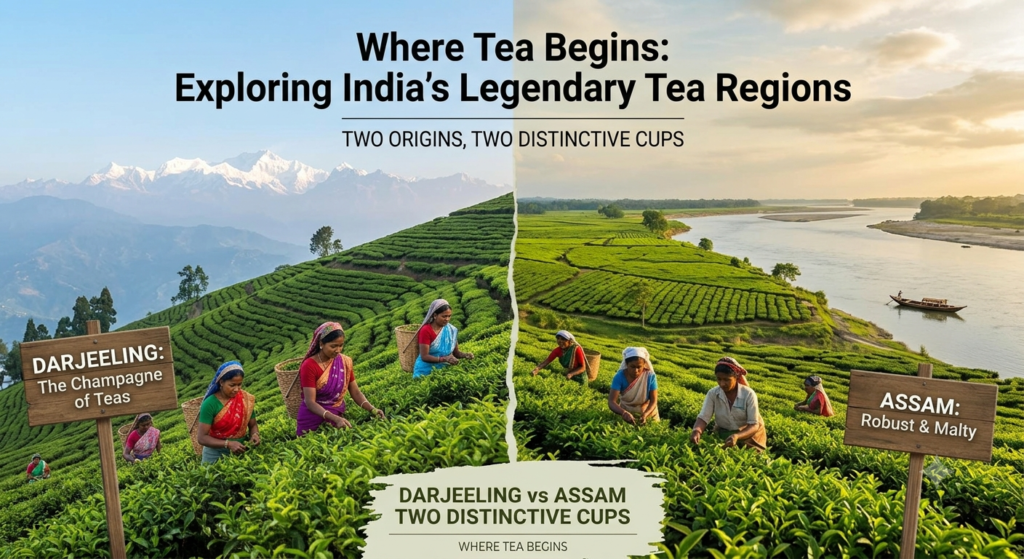
When people think of Indian tea, two names often come to mind first: Darjeeling and Assam.
Both are celebrated around the world, yet the teas they produce can feel remarkably different. Their contrasting landscapes, climates, cultivars and traditions shape everything from the appearance of the leaf to the aroma and character of the finished cup.
Understanding the difference between them isn’t about deciding which is better. It is about discovering what makes each region distinctive.
Darjeeling: Tea from the Himalayan Hills
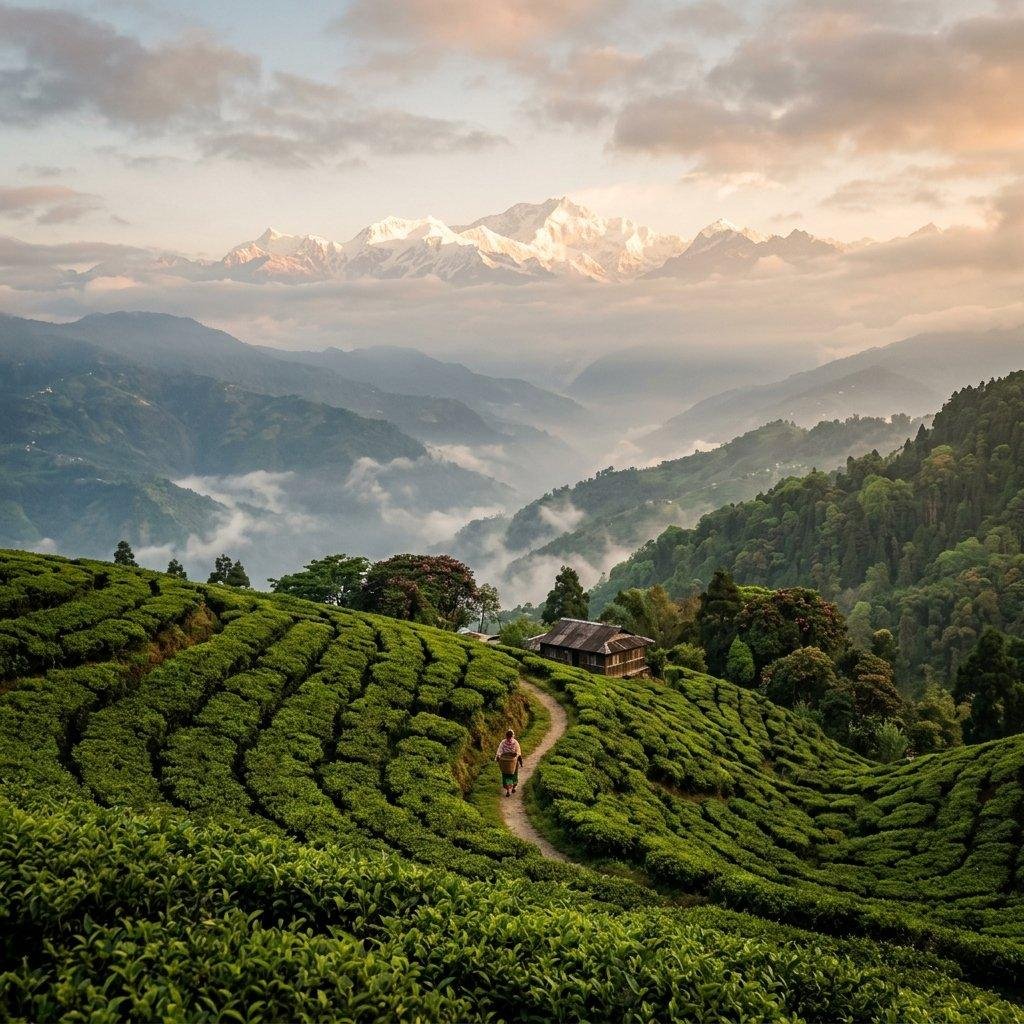
Nestled in the foothills of the Himalayas in West Bengal, Darjeeling’s tea gardens sit among steep slopes, cool temperatures and mist-covered mountains.
The region’s high elevation and unique growing conditions contribute to the character for which Darjeeling tea is known.
Often called the “Champagne of Teas,” Darjeeling tea is prized for its delicate and complex profile. Depending on the harvest and garden, the cup can offer floral aromas, fruity notes and a characteristic muscatel-like sweetness.
Darjeeling teas are also strongly associated with their seasonal flushes:
- First Flush: Light, fresh and floral, with a lively character.
- Second Flush: Fuller and more pronounced, often associated with muscatel notes.
- Monsoon Flush: Generally deeper and stronger, influenced by the heavy rains.
- Autumn Flush: Smooth and rounded, offering a different expression of the Darjeeling character.
The result is a tea that is often appreciated slowly — allowing its fragrance and layers to unfold with every sip.
Assam: Tea from the Brahmaputra Valley
Travel east and the landscape changes dramatically.
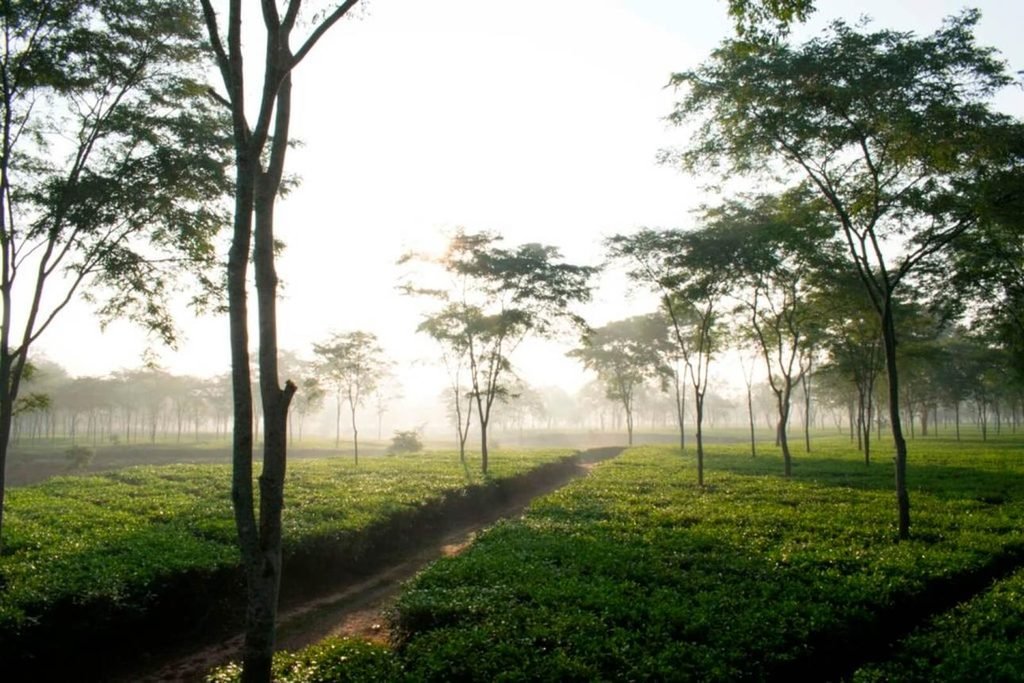
Assam lies in northeastern India, where the broad Brahmaputra Valley provides a warm, humid environment with abundant rainfall. These conditions support vigorous tea growth and help create a very different style of tea.
Assam tea is known for its bold, rich and malty character. It typically produces a deeper-coloured liquor and a stronger cup than many Darjeeling teas.
Its robust profile makes Assam particularly popular for breakfast teas and blends. It also pairs naturally with milk and sugar, making it a familiar choice for everyday Indian chai.
From strong morning brews to traditional milk tea, Assam’s character is built around depth and strength.
Darjeeling vs Assam: What Makes Them Different?
| Characteristic | Darjeeling | Assam |
|---|---|---|
| Region | Himalayan foothills, West Bengal | Brahmaputra Valley, Assam |
| Landscape | Mountainous and steep | Lowland and valley |
| Climate | Cooler and misty | Warm, humid and rainy |
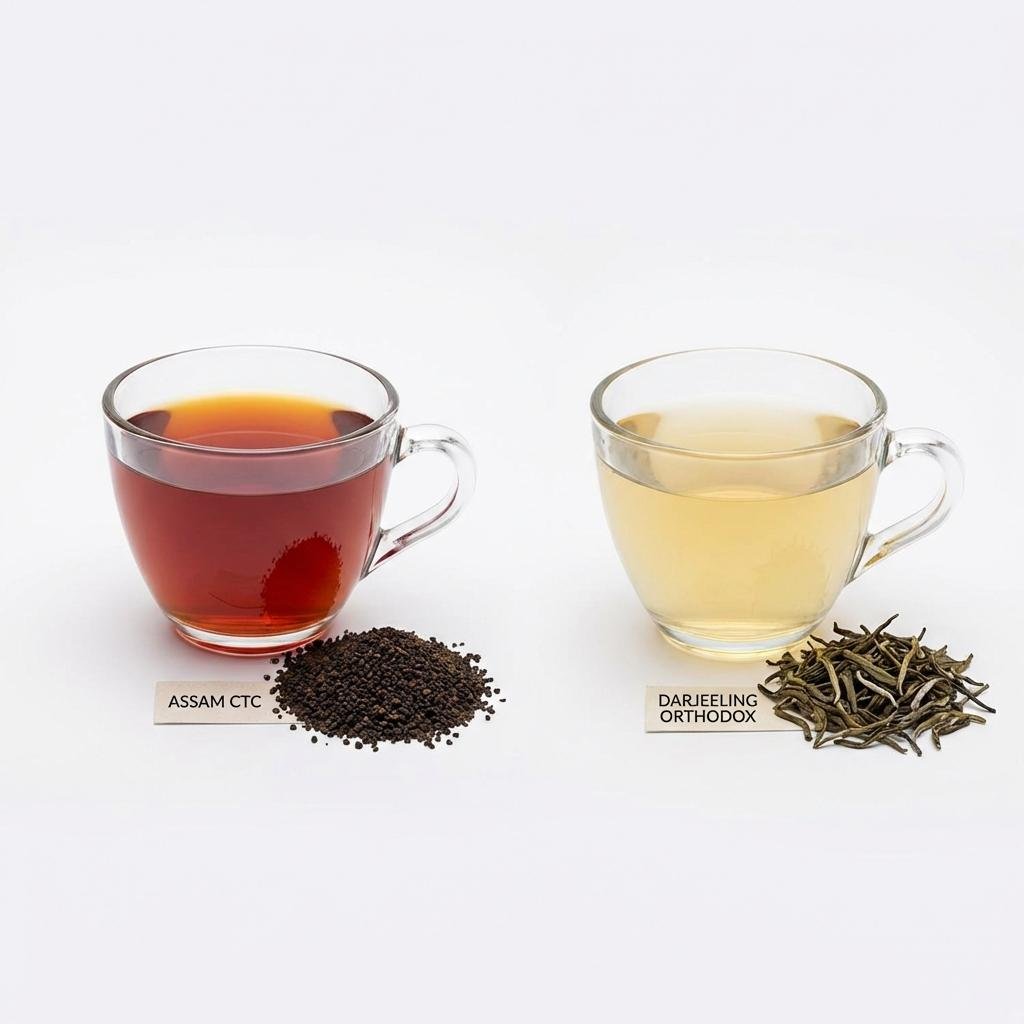
| Cup Character | Delicate, floral, fruity | Bold, malty, full-bodied |
| Aroma | Fragrant and layered | Rich and robust |
| Liquor | Generally lighter | Generally deeper |
| Common Use | Often enjoyed without milk | Excellent with milk; popular in blends |
These differences are not absolute. Tea character can vary considerably depending on the garden, cultivar, season, processing method and brewing technique.
Two Origins, Two Ways to Enjoy Tea
Perhaps the most interesting part of comparing Darjeeling and Assam is that neither needs to compete with the other.
Darjeeling invites you to explore nuance. Its fragrance, lighter body and layered flavours make it particularly suited to those who enjoy discovering subtle changes in the cup.
Assam embraces strength. Its rich body, malty notes and depth make it a natural companion for mornings, milk tea and everyday brewing.
One reflects the cool mountain environment of the Himalayas. The other carries the warmth and abundance of the Brahmaputra Valley.
Together, they represent two of India’s most distinctive tea-growing traditions.
Finding Your Cup
Choosing between Darjeeling and Assam ultimately comes down to the kind of tea experience you enjoy.
If you prefer floral aromas, lighter textures and complex, evolving flavours, Darjeeling may be the style to explore.
If you enjoy bold body, malty depth and a stronger everyday brew, Assam offers a very different experience.
And for tea lovers, discovering both is part of the journey.
Because India’s tea story was never meant to be expressed through a single cup.
It is found across mountains, valleys, seasons and gardens — with every region adding its own character to the leaf.
Two origins. Two distinctive cups. One remarkable tea heritage.