
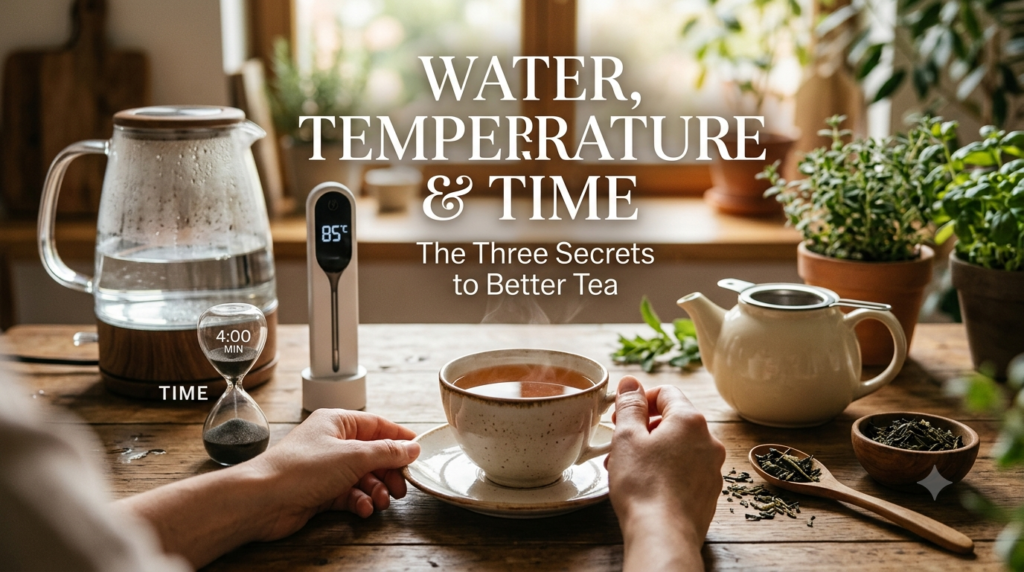
The Three Things That Shape Every Cup
Tea brewing can seem wonderfully simple: add tea, pour in hot water, and wait.
But three small variables can completely change the experience — water, temperature, and time.
Get them right, and a tea can become brighter, smoother, more aromatic and balanced. Get them wrong, and even an excellent tea can taste flat, bitter or overly strong.
The good news? You don’t need complicated equipment to improve your brewing. A little attention to these three elements is enough.
Water: The Foundation of Your TeaWater: The Foundation of Your Tea
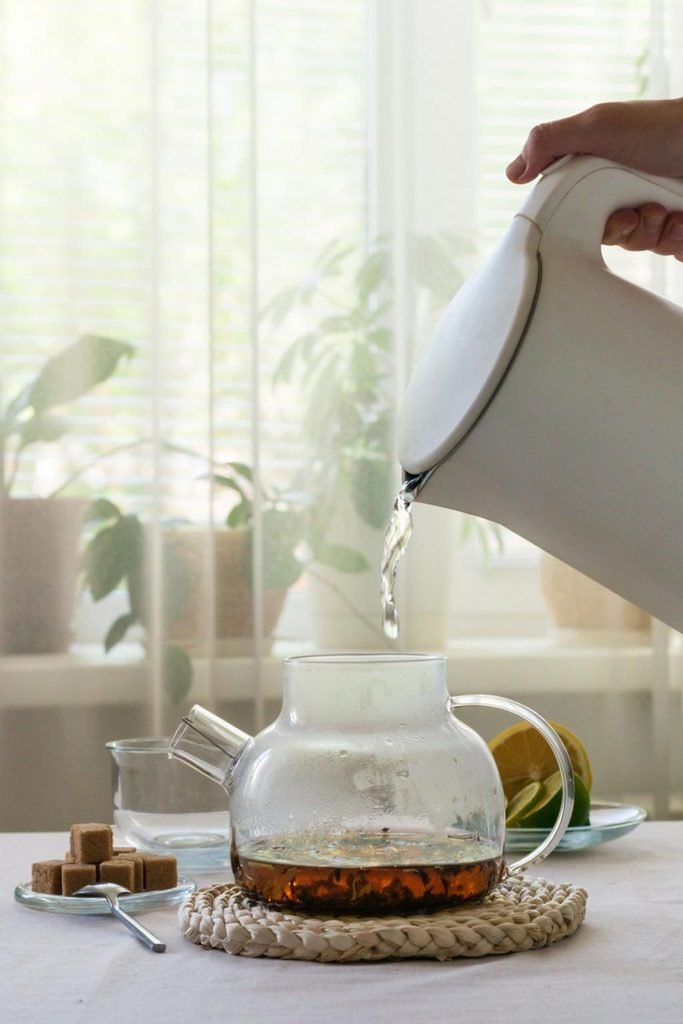
Tea is mostly water, so the quality of the water you use matters more than you might think.
Water with a strong smell or excessive mineral content can interfere with the natural aromas of tea. Hard water, for example, may make the cup taste dull or mask some of the tea’s delicate character.
For everyday brewing, fresh, clean drinking water is the best place to start.
A simple rule
Use freshly drawn water and avoid repeatedly boiling the same water whenever possible. Fresh water contains dissolved oxygen that can help produce a more vibrant cup.
If your tap water has a noticeable chlorine smell or is particularly hard, filtered water can make a noticeable difference.
For delicate teas such as Darjeeling, this is especially important. Clean, neutral-tasting water allows the tea’s floral, fruity and muscatel-like notes to come through more clearly.
Think of water as the canvas — the better the canvas, the more clearly the tea can express itself.
Temperature: Hotter Isn’t Always Better
One of the most common tea-brewing mistakes is assuming that boiling water is suitable for every tea.
It isn’t.
Different teas respond differently to heat. Water that’s too hot can extract bitter or astringent compounds quickly, particularly in delicate teas. Water that’s too cool, on the other hand, may leave the tea tasting weak or underdeveloped.
A useful starting point is:
| Tea Type | Approx. Water Temperature |
|---|---|
| Green Tea | 70–80°C |
| White Tea | 75–85°C |
| Darjeeling Black Tea | 85–95°C |
| Assam Black Tea | 90–100°C |
| CTC Black Tea | 95–100°C |
| Herbal Infusions | 95–100°C |
These are starting points, not strict rules. The ideal temperature can vary depending on the tea, leaf size, processing style and your personal preference.
Why Darjeeling deserves attention
Darjeeling tea is known for its delicate character. Using aggressively boiling water can overpower its more subtle aromas.
Try starting around 90°C and adjust from there.
If your cup tastes harsh, reduce the temperature. If it tastes too light, increase it slightly.
Time: The Difference Between Balanced & Bitter
Once the water meets the leaves, the clock starts.
The longer tea steeps, the more compounds are extracted from the leaves. This can increase body and intensity — but too much time can also bring out excessive bitterness and astringency.
For many loose-leaf black teas, 3–5 minutes is a useful starting range.
For a lighter Darjeeling, you might prefer something closer to 3–4 minutes.
The key is to experiment rather than automatically following a single number.
A simple adjustment trick
If your tea is:
Too bitter or astringent → shorten the steeping time or lower the temperature.
Too weak → increase the steeping time slightly or use more tea.
Too flat → check your water quality and freshness.
Small adjustments can make a surprisingly large difference.
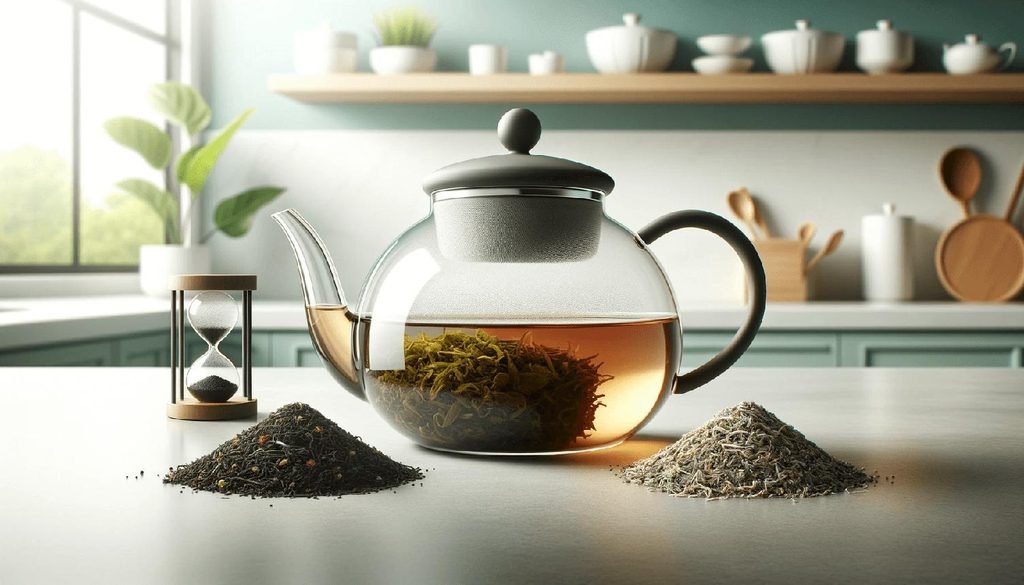
The Secret Is Balance
Water, temperature and time don’t work independently.
They work together.
For example, using hotter water generally increases extraction. If you also steep for a long time, you may end up with a much stronger and more astringent cup.
But if you lower the temperature, you may be able to steep for longer while maintaining a smoother profile.
Think of brewing as finding a balance between extraction and expression.
The goal isn’t simply to make the strongest cup.
It’s to reveal what makes that particular tea special.
A Simple Starting Recipe for Darjeeling Tea
Want to put the three secrets into practice?
Try this simple method for loose-leaf Darjeeling:
You’ll need:
- 2–3 g loose-leaf tea
- 200–250 ml fresh water
- Water at approximately 90°C
- A teapot or infuser
Method:
- Warm your teapot or cup with a little hot water and discard it.
- Add the tea leaves.
- Pour in approximately 90°C water.
- Steep for 3–4 minutes.
- Strain the leaves.
- Taste before adding milk or sugar.
Pay attention to the aroma first, then the flavour and finish.
If it’s too strong, adjust the time or temperature next time. If it’s too light, give the leaves a little more time.
Let the Leaves Lead
There is no single “perfect” way to brew tea.
The perfect cup is the one that brings out the qualities you enjoy most.
But when a tea doesn’t taste quite right, don’t immediately blame the leaves. Start with the three fundamentals: water, temperature and time.
Change one variable at a time, taste the difference, and you’ll quickly begin to understand how your tea responds.
Because great tea isn’t only about having good leaves.
It’s about knowing how to bring them to life.
Brew Better. Taste More.
At Auryn, we believe every tea has its own character — and the right brewing method helps reveal it.
Take your time. Experiment with temperature. Pay attention to the water.
And most importantly, let the tea speak for itself.
The Auryn Journal
From leaf to cup, with intention.